Pescod History
Pescod Hall and Boston has a rich and diverse history. Read all about it here.
Welcome to Boston, a lively historic port and market town locate on the River Witham, joining the North Sea at a part of the coast called The Wash.
Boston and its magnificent church are named after St Botolph, an Anglo-Saxon monk, who according to tradition visited the area in the 7th Century.
In the early medieval period, only London was richer and more important than Boston as a port. Boston’s wealth was based on the wool trade with Hanseatic League countries.
St Botolph’s Church (the Stump), Boston Guildhall and town’s stunning Market Place are just three examples of its medieval splendour. The large weekly markets each Wednesday and Saturday and its annual May Fair, also date back from this period.
Boston today is a diverse and vibrant town to explore and discover, with a range of quality national and independent shops, wonderful dining experiences and a unique history and heritage.
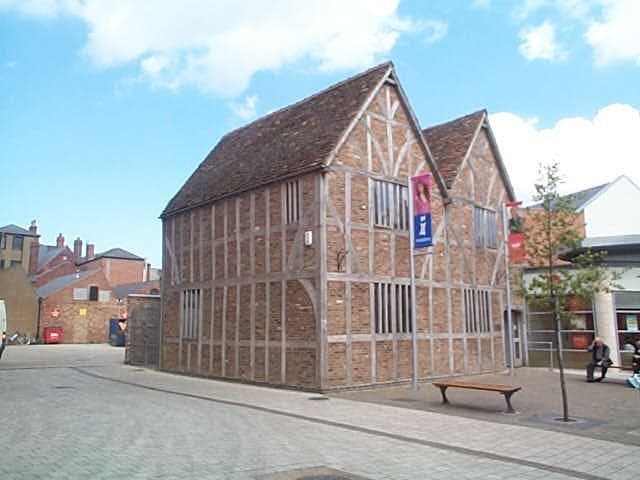
Pescod Square is named after the Pescod family an features the reconstructed Pescod Hall, home of the Pescod family. The Pescod’s were a notable family amongst the community of Merchants in the town.
Walter Pescod, who dies in 1398, is buried in St Botolph’s Church. On his memorial brass his clothing is adorned with peapods, a playful reference to his family name meaning a trader in peas and also, more literally as a container or pod in which peas would be kept. In the artwork the motif is updated and featured amongst the symbols of his trade and letters of his name.
The shears represent the wool trade in which they and many others in Boston traded. They also traded in herring – represented here in skeletal form. The design is fragmented in the hope that children in particular may take a rubbing of the whole artwork or create their own from the broken elements.
Why don’t you give it a go!